What Is Ayahuasca? A Clear, Grounded Guide to the Vine, the Ceremony, and the Research
Ayahuasca — the Amazonian plant brew known as the "vine of the soul" — sits where centuries-old ceremony meets modern brain science. This guide covers what ayahuasca is, how it works, what a ceremony involves, what the research shows, the serious safety risks to understand, and where it's legal in 2026 — clearly and respectfully.
Karina Allen
|

Few psychedelics carry as much mystique as ayahuasca. It's ancient rather than synthetic, taken in ceremony rather than a clinic, and it asks more of the people who drink it than almost any other. If you've heard the stories of all-night visions and life-changing insight and wondered what's real, what's safe, and what it actually involves, here's the grounded version, with respect for where this medicine comes from and honesty about its risks.
Key takeaways
Ayahuasca is a brew, not a single drug — traditionally the Banisteriopsis caapi vine combined with a DMT-containing leaf such as chacruna.
The vine contains MAOIs, which make the DMT active by mouth. That same chemistry is why ayahuasca is dangerous to combine with many medications, especially antidepressants.
Early research is promising for depression, trauma, and wellbeing, but it's younger and less controlled than the science on psilocybin or ketamine.
It's a serious experience with real medical and psychological risks. Screening, preparation, setting, and integration matter enormously — and its Indigenous origins deserve respect.
What is ayahuasca?
Ayahuasca is a psychoactive tea brewed from Amazonian plants and used ceremonially by Indigenous peoples of the region for generations. The name comes from Quechua and is often translated as "vine of the soul." At its heart are two plants: the Banisteriopsis caapi vine and the leaves of a DMT-containing plant, most commonly Psychotria viridis (chacruna).
That pairing is the clever, and slightly mysterious, part.
DMT, the compound responsible for ayahuasca's vivid visionary effects, is normally broken down in your gut before it can do anything. The caapi vine contains natural MAOIs (monoamine oxidase inhibitors) that switch off the enzyme responsible, allowing the DMT to become active when you drink it. How Amazonian peoples discovered this combination among tens of thousands of rainforest species is one of ethnobotany's great open questions.
How ayahuasca works in the brain
Once active, DMT acts on the same serotonin (5-HT2A) receptors as other classic psychedelics like psilocybin, producing ayahuasca's characteristic imagery, emotional intensity, and shifts in thought. Brain-imaging studies from researchers in Brazil have found that ayahuasca reduces activity in the default mode network (the circuitry tied to our habitual sense of self and rumination) which may help explain the feeling of stepping outside your usual patterns and seeing your life from a new vantage point.
The brew also has a strong physical dimension. Many people experience "la purga" (purging through vomiting or, less often, diarrhea), which traditions frame not as a side effect, but as part of the cleansing itself.
Curious how one molecule can open a whole inner world?
In this short TEDx talk, researcher Nick Glynos breaks down what DMT (the visionary compound at ayahuasca's core) actually does once it reaches the brain, and why scientists are taking a fresh look at it. A clear, accessible way to go one layer deeper than the summary above:

What the ayahuasca experience is like
Ayahuasca is rarely taken casually. In traditional and neo-shamanic settings, it's drunk at night in a ceremony led by an experienced curandero or facilitator, guided by icaros — the songs believed to steer the visions and hold the space — and it usually unfolds over four to six hours.
What happens in those hours varies enormously. The come-up often begins within 30 to 60 minutes and builds toward a peak of vivid, dreamlike visions, waves of emotion, distortions of time and space, and a sense of meeting your memories or fears face to face.
Many people also purge — la purga — through vomiting or, less often, diarrhea, which traditions frame not as a side effect but as part of the cleansing. It can feel beautiful, confronting, or both in the same night. That range is exactly why the container matters so much: your mindset going in (set) and the environment around you (setting) shape everything.
Want to see what this actually looks like?
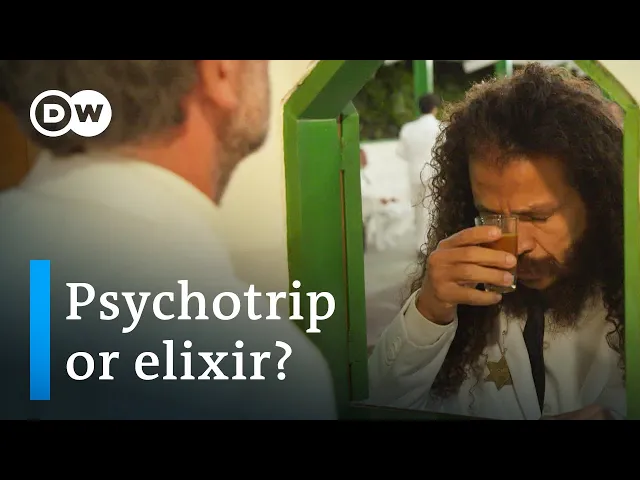
This documentary from DW (Deutsche Welle) follows ayahuasca's rapid rise in Brazil and asks the honest question — remedy or risk? — giving you a grounded look at real ceremonies and the people drawn to them:
What the research actually shows
Modern science is beginning to catch up with what traditions have long claimed, though the evidence base is still young.
The most cited milestone is a 2019 randomized, placebo-controlled trial in Brazil, which found that a single dose of ayahuasca produced significant antidepressant effects a week later in people with treatment-resistant depression — one of the first controlled trials of its kind. Observational studies of retreat participants have reported reductions in anxiety and depression and gains in wellbeing, mindfulness, and self-compassion, with the strongest benefits often among those who report a profound or "mystical" experience.
Early work is also exploring ayahuasca for trauma, grief, and addiction, and neuroimaging continues to map its effects on brain networks.
The honest caveats: many studies are small or observational, ayahuasca is genuinely hard to study in a blinded way (the effects are unmistakable), and promising early findings are not the same as proven treatment.
Prefer to hear it from the researcher who ran the studies?
In the talk below, neuroscientist Dr. Dráulio de Araújo, who led the Brazilian ayahuasca-and-depression trials described above, shares what his team actually found, and what brain imaging hinted about why a single dose can lift a depression that hadn't budged for years.
It's the science, grounded and firsthand. Give it a watch if the research is the part you came for:
Respecting where the medicine comes from
Ayahuasca isn't a molecule that appeared in a lab. It's a living tradition belonging to Amazonian peoples, and later carried into syncretic churches such as Santo Daime and the União do Vegetal. As global interest has surged, so have real concerns: over-harvesting of the slow-growing caapi vine, exploitation of Indigenous communities, and "retreats" run by underqualified facilitators.
Approaching ayahuasca respectfully means taking its origins seriously: choosing practitioners with genuine lineage or training, supporting reciprocity with the communities and ecosystems the tradition comes from, and resisting the urge to treat a sacred practice as a bucket-list item.
It's part of doing this well, not an afterthought.
Risks, safety, and who should not drink it
This is where ayahuasca demands more caution than most psychedelics, because the risks are as much physical as psychological.
Medication interactions. The MAOIs in ayahuasca can interact dangerously with many drugs — most importantly antidepressants (SSRIs, SNRIs, MAOIs), some other medications, and certain stimulants — with a risk of serotonin syndrome, which can be life-threatening. This is not a small caveat; reputable facilitators screen for it and require tapering under medical guidance.
The dieta. Traditional preparation restricts certain foods (aged, fermented, or tyramine-rich) and substances in the days around a ceremony, partly for these interaction reasons.
Physical strain. Ayahuasca raises heart rate and blood pressure, so pre-existing heart conditions warrant real caution and medical screening.
Mental-health history. A personal or family history of psychosis, schizophrenia, or bipolar disorder is generally considered a contraindication, as the experience can trigger or worsen these conditions.
Unregulated settings. Serious harm is rare but has happened, often linked to contraindicated combinations, undisclosed health conditions, adulterated brews, or unsafe retreats. Thorough screening and a trustworthy setting are non-negotiable.
The throughline is harm reduction:
Honest medical and psychological screening, a qualified and trustworthy practitioner, and never mixing ayahuasca with antidepressants or other contraindicated substances.
Is ayahuasca legal?
Because ayahuasca contains DMT (a Schedule I substance in the United States) the brew is generally illegal to make, sell, or possess federally.
There are notable exceptions: U.S. courts have upheld the religious use of ayahuasca by certain churches (a landmark 2006 Supreme Court ruling protected the União do Vegetal), and some cities have moved to deprioritize enforcement around plant medicines.
Internationally, ceremonial ayahuasca is legal or tolerated in countries including Peru, Brazil, and Costa Rica, which is why much of the retreat world is based there. "Legal" in a retreat country still doesn't guarantee safety; the quality of screening and facilitation varies widely.
Is there a legal way to drink ayahuasca in the U.S.?
Yes, but a narrow one.
U.S. courts have granted two ayahuasca-using churches the right to drink the brew as a genuine religious sacrament: the União do Vegetal (UDV), protected by a unanimous 2006 Supreme Court ruling, and Santo Daime, protected by a 2009 federal court decision. For sincere, initiated members of these recognized congregations, supervised ceremonial use is legal under religious-freedom law.
Outside those churches, there is no legal route in the U.S. today; no FDA-approved ayahuasca, and no state-licensed program like Oregon's for psilocybin. A handful of cities have deprioritized enforcement around plant medicines, but deprioritization isn't legalization. And the church exemptions aren't a tourist loophole: courts look closely at whether membership and practice are sincere.
If a "legal ayahuasca" offer sounds like a workaround, treat it with real skepticism.
Why preparation and integration matter
Ayahuasca has a reputation for showing people exactly what they need to see, which can be as destabilizing as it is healing.
What tends to separate a transformative experience from an overwhelming one is everything around the ceremony: honest preparation and screening beforehand, a safe and reputable setting, and (perhaps most of all) integration afterward, the slower work of making sense of what surfaced so it translates into real change.
This is where trained, psychedelic support helps: not to arrange a ceremony, but to help you prepare thoughtfully, ask the right questions, stay safe, and integrate what comes up. The people who do this work well tend to make fewer promises, not more.
If you're exploring whether guided, psychedelic-informed support might be a fit, Guides Collective offers a low-pressure, confidential way to start. There's no pressure to decide anything today, just a grounded place to begin exploring this work responsibly.
Frequently asked questions
What does an ayahuasca ceremony feel like?
Deeply variable. Most ceremonies run four to six hours and can involve vivid visions, strong emotions, physical purging, and a sense of profound meaning — sometimes beautiful, sometimes challenging.
Is ayahuasca legal?
In the U.S., generally no, because it contains DMT — though certain religious uses are protected. It's legal or tolerated for ceremonial use in several countries, including Peru and Brazil.
Who should not drink ayahuasca?
Anyone taking antidepressants or other interacting medications without medical guidance, and people with a personal or family history of psychosis or bipolar disorder, among other conditions. Proper screening is essential.
Sources & further reading:
Palhano-Fontes et al. (2019), Psychological Medicine — randomized controlled trial of ayahuasca for treatment-resistant depression
de Araújo / Palhano-Fontes et al. — ayahuasca and the default mode network (neuroimaging)
ICEERS — ayahuasca legal information and safety resources
Chacruna Institute — Indigenous reciprocity, culture, and vine conservation
MAPS — frequently asked questions on ayahuasca globalization
This article is for education, not medical or legal advice. Ayahuasca is powerful, is illegal in many places, and can be dangerous when combined with certain medications; nothing here encourages illegal activity or unsupervised use.
Learn More
Join our newsletter
No spam, unsubscribe anytime.