What a Psilocybin Session Is Actually Like, From Someone Who Had One
Four weeks of studies can tell you what happened on average. None of them can tell you what it was like to be the person it happened to. So this one is a single story, from a Portland mother who went through Oregon's regulated programme while grieving her son. It isn't evidence of anything, and it's worth your eight minutes anyway. Below it: how to hold a story like this without being misled by it.
Karina Allen
|
The question the studies don’t reach
For four weeks this sequence has been studies, protocols and researchers. All of it useful. None of it able to answer the thing most people are actually carrying.
What is this like for a person?
A study reports what happened across a group. It can’t tell you what it felt like to be any one of them. For that you need somebody to describe it, and the only people who can do that are people it already happened to.
A mother in Portland
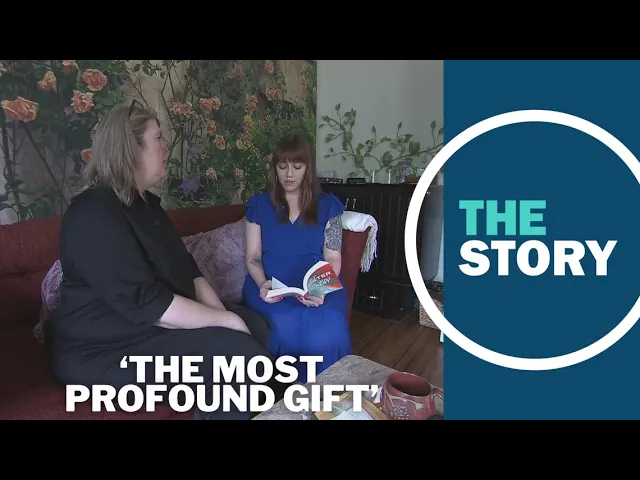
KGW, the NBC station in Portland, spent eight minutes with a woman who went through Oregon’s regulated psilocybin programme after losing her 25-year-old son in 2023. She talks about what she hoped for, what happened, and what it did and didn’t change.
What one story can and can’t do
It’s worth being clear about what you just watched, because a vivid account of one person is the most persuasive and least reliable thing in this entire sequence.
Here’s what it can do. It can show you the texture of something: the shape of a day, what preparation actually feels like, how someone talks about it a year later. No statistic reaches any of that, and the absence of it is why most people stay stuck on the question.
Here’s what it can’t do. It can’t tell you the odds of anything. One account carries no information about how common that outcome is, and the accounts that get filmed are, almost by definition, the ones that went somewhere worth filming. Nobody makes a segment about the person for whom not much happened.
That isn’t a reason to distrust her. It’s a reason to notice what kind of thing her account is: a demonstration that something is possible, which is different from a claim about what is likely.
A story proves that something can happen. It says nothing about how often it does.
What is structurally true here
Separate from her experience, some things about the situation are checkable, and they matter more than they look.
She went through Oregon’s regulated programme. That means a licensed facilitator, a preparation session before the day itself, a known quantity of a tested substance, and somebody sober present throughout.
Those are the same four conditions the researchers in this sequence have been describing from the other direction. What you’re watching isn’t somebody taking something and hoping. It’s the arrangement that the evidence keeps pointing at, with a person inside it.
A story can show you that something is possible. It can’t tell you what it would be like for you, and no article can either, because that depends on your history and what you’re carrying. That’s the one thing a conversation does well. The intake takes about five minutes, and the consultation call after it is free, with nothing to book at the end.
Where we’d be careful
One thing worth saying plainly, because it would be easy to leave it out.
If you watched that and wondered whether the research supports psilocybin for grief specifically, the honest answer is that it’s early. The well-known findings on psilocybin and existential distress come from trials in people with life-threatening cancer, facing their own mortality. That is a different thing from bereavement, however close the two feel from outside.
Research into grief itself is at a much earlier stage. A feasibility study protocol for prolonged grief disorder has been published, which is a plan for a small early study rather than a set of results.
So her account sits ahead of the evidence rather than on top of it. That’s not unusual, and it’s not a mark against her. It’s just worth knowing which one you’re looking at, particularly since a search on this topic will return a great many confident pages published by people selling retreats.
Where a story like this belongs
A single account is more useful late than early. Met first, before you know what a session involves or what the evidence does and doesn’t support, it does the work a testimonial does: it makes something feel true before you have any way of checking it.
Met after the structure — what the preparation is for, what the risks actually are, where the research is thin — it does something better. It puts a person inside a frame you can already evaluate, so you’re judging the whole thing rather than the feeling.
If this is where you’ve started, the other pieces are worth having first.
The one thing left to judge is your own situation.
That’s the part you don’t have to work out alone. A guide can talk it through with you, and the first conversation is free.
Talk to a guide.
Private · No commitment · No experience needed
Frequently asked questions
Is her experience typical? Nobody can tell you that, and it’s the wrong question to ask of a single account. What it establishes is that this outcome is possible for somebody in a regulated programme with proper support. How common it is would take a different kind of evidence entirely.
Is Oregon’s programme available to people from other states? Oregon’s psilocybin services are open to adults regardless of where they live, provided the session takes place in Oregon at a licensed service centre. Rules change, so anyone considering it should check the current position with the programme directly rather than relying on an article.
Does the research support this for grief? Not yet, in the way most people mean. The strongest existential-distress findings are in people with life-threatening illness, which is a different situation. Grief-specific work is at the feasibility stage.
Sources and further reading
KGW News, Portland mom explores psilocybin therapy to process grief after losing her son, 2025
Oregon Health Authority, Psilocybin 101: what to know about Oregon’s psilocybin services
____________________________________________________________________
This article is for educational purposes only. Not medical, therapeutic, or legal advice.


Join our newsletter
No spam, unsubscribe anytime.