What Is Ketamine? A Clear, Grounded Guide to the Medicine and the Research
Ketamine — a decades-old anesthetic now used as a fast-acting treatment for depression — is the one "psychedelic" you can already get legally, by prescription. This guide covers what ketamine is, how it works, what the research really shows, the risks that matter, how people access it, and where the law stands in 2026.
Karina Allen
|
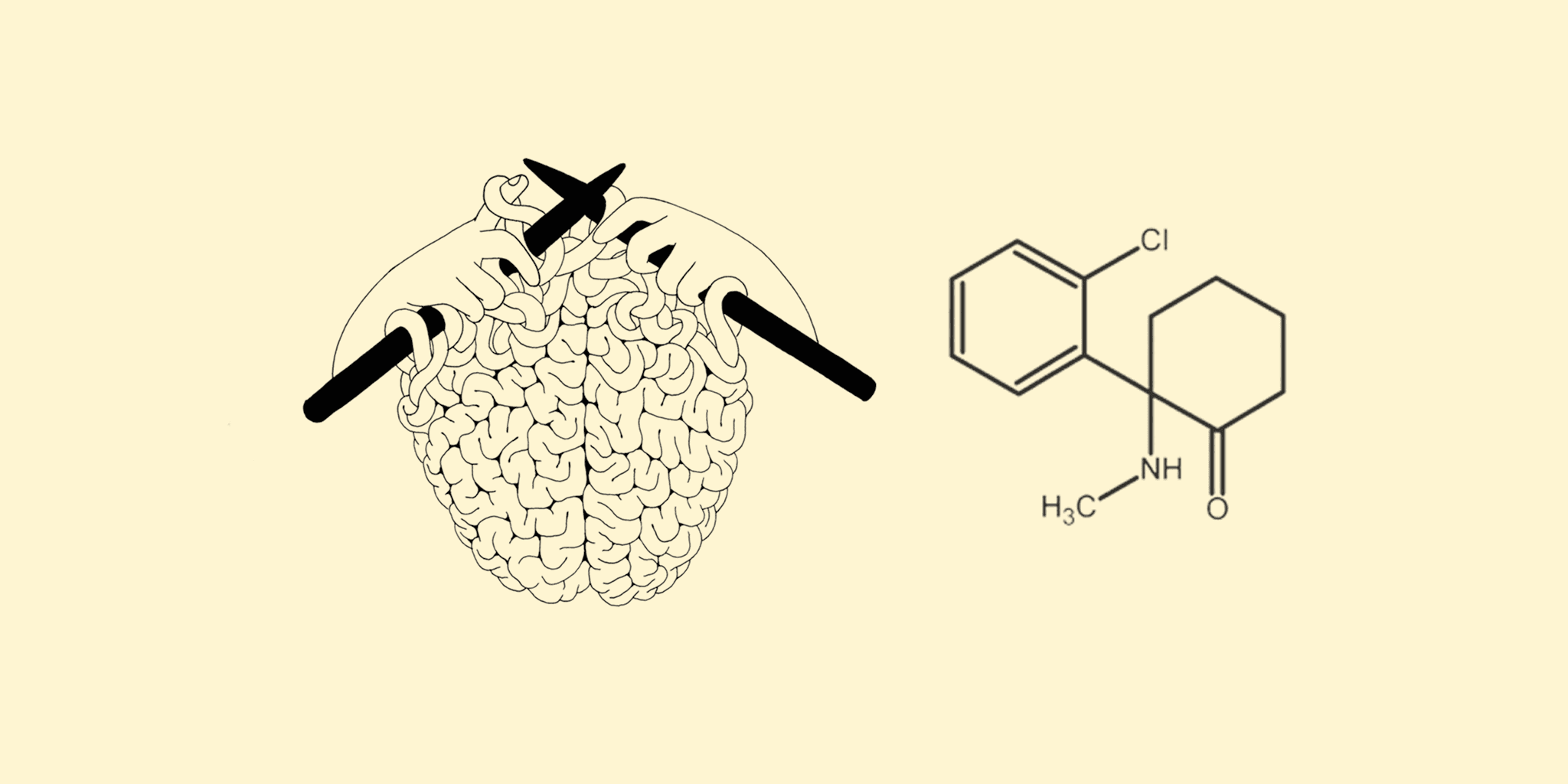
Of all the compounds in the psychedelic conversation, ketamine is the outlier: it's already a legal medicine, it works in hours rather than weeks, and it isn't technically a psychedelic at all.
If you've seen the headlines about ketamine clinics and at-home lozenges and wondered what's real and what's safe, here's the grounded version.
Key takeaways
Ketamine is a dissociative anesthetic, not a classic psychedelic — it works mainly on glutamate (via NMDA receptors), not serotonin.
It can lift depression within hours, where standard antidepressants take weeks. The nasal spray esketamine (Spravato) is FDA-approved; IV ketamine is used off-label in clinics.
The effects are real but often temporary, so treatment usually means a course of sessions plus maintenance.
In the U.S. it's a legal, Schedule III prescription medicine — but not risk-free. Bladder damage and dependence are real concerns with heavy or unsupervised use.
What is ketamine?
Ketamine was first synthesized in 1962 and approved as a surgical anesthetic in 1970. It's still one of the most widely used anesthetics in the world — on battlefields, in emergency rooms, and in pediatric and veterinary medicine — and it sits on the World Health Organization's list of essential medicines.
What makes it unusual is that at lower, sub-anesthetic doses it produces a dissociative state: a sense of detachment from your body, your surroundings, and your usual sense of self.
That dissociative quality is why ketamine gets grouped with psychedelics, but chemically it's a different family. Classic psychedelics like psilocybin and LSD act on serotonin. Ketamine works on a different system entirely, which is part of why its effects — and its uses — look so different.
Ketamine comes in a few forms:
Nn intravenous (IV) or intramuscular (IM) injection
A nasal spray (esketamine
The "S" half of the molecule, sold as Spravato)
Sublingual lozenges or "troches" that dissolve under the tongue.
How ketamine works in the brain
Ketamine blocks a receptor called NMDA, which handles the brain's main excitatory chemical messenger, glutamate.
Paradoxically, blocking that receptor triggers a surge of glutamate signaling through a different pathway. That surge appears to switch on growth factors like BDNF and prompt neurons to form new connections — a burst of neuroplasticity.
This is the leading explanation for ketamine's most striking feature: speed. Standard antidepressants nudge serotonin over weeks. Ketamine seems to rapidly help rebuild communication between brain cells, which is why some people feel a shift in mood within hours of a single dose.
Researchers often describe it as opening a short window in which the brain is more able to change.

What a ketamine experience is like
At the doses used for mental health, ketamine usually produces a gentle-to-moderate dissociation: a floaty, dreamlike detachment, altered sense of time and space, and sometimes a feeling of watching your thoughts from a distance.
An IV session typically lasts around 40 to 60 minutes; lozenges and the nasal spray can run a bit longer.
Higher, recreational doses are a different story. They can tip into intense, immobilizing dissociation (the so-called "K-hole") along with confusion, nausea, and, for some people, fear.
As with any of these experiences, your mindset going in (set) and your physical and emotional environment (setting) shape how it unfolds, which is a major reason clinical ketamine happens in a calm, monitored space rather than alone.
What the research actually shows
Ketamine's antidepressant effect was first documented around 2000, and it has since become one of the most studied fast-acting treatments in psychiatry.
Depression.
For people with treatment-resistant depression (those who haven't improved on multiple standard medications) ketamine can produce meaningful relief, often within a day.
In 2019 the FDA approved esketamine (Spravato) for treatment-resistant depression alongside an oral antidepressant, in 2020 for depression with acute suicidal thoughts, and in 2025 as the first stand-alone (monotherapy) treatment of its kind.
IV ketamine, while only FDA-approved as an anesthetic, is widely used off-label for the same purpose.
Compared with ECT.
In a 2023 head-to-head trial, IV ketamine was at least as effective as electroconvulsive therapy (long the benchmark for severe depression) for many people with non-psychotic treatment-resistant depression, without ECT's memory side effects.
Other areas.
Early research is exploring ketamine for PTSD, anxiety, OCD, and substance use disorders, though the evidence there is younger and less settled.
One honest caveat runs through all of it: ketamine's benefits are often temporary. A single dose may last days to weeks, which is why treatment is usually a series of sessions followed by maintenance — and why booster doses, integration, and ongoing care matter as much as the medicine. Be skeptical of clinics advertising dramatic "success rates"; real-world results vary widely.
How people actually access ketamine
Because ketamine is a legal medicine, access looks very different from other psychedelics.
Most people encounter it in one of a few ways: IV or IM infusions at a specialty clinic, the Spravato nasal spray in a certified setting where you're monitored for a couple of hours afterward, or sublingual lozenges prescribed through telehealth and taken at home.
Many providers pair the medicine with ketamine-assisted therapy — sessions with a trained therapist before, during, or after dosing to help you prepare and make sense of what comes up.
The at-home telehealth model expanded access dramatically, but it has also drawn scrutiny: taking a dissociative drug without in-person monitoring carries added risk, and high-profile cases of misuse have prompted regulators to take a closer look at how at-home ketamine is prescribed.
Risks, safety, and who should be cautious
Ketamine has a long safety record as a supervised medicine, but it is not casual. The risks worth taking seriously:
In the moment — ketamine raises blood pressure and heart rate, so it needs caution (and screening) for anyone with uncontrolled hypertension or heart conditions. Intense dissociation, nausea, and anxiety can also occur.
Bladder and urinary damage — frequent, heavy use is linked to a painful condition sometimes called ketamine cystitis, which can seriously damage the bladder. This is a real concern with regular recreational use, not occasional supervised dosing.
Dependence — ketamine can be psychologically habit-forming, and tolerance builds with repeated use. The pattern to watch is escalating, self-directed use outside a treatment plan.
Unsupervised use — because it impairs coordination and awareness, using ketamine alone or without monitoring raises the risk of accidents and, rarely, dangerous outcomes when combined with other depressants.
The throughline is harm reduction:
Proper medical screening, a monitored setting, honest conversations about dose and frequency, and integration support are what separate careful treatment from risky use.
Is ketamine legal?
In the United States, ketamine is a Schedule III controlled substance — legal to prescribe and use under medical supervision, unlike psilocybin or MDMA.
Esketamine is FDA-approved for depression; racemic ketamine is approved as an anesthetic and used off-label. Using or buying ketamine recreationally remains illegal, and the fast-growing at-home telehealth market is under increasing regulatory review.
Internationally, ketamine is available as a medicine in most countries. In the U.K. it remains a Class B drug — a 2026 government-commissioned review recommended keeping it there despite rising recreational use and calls for a tougher classification.
As always, "legal" means prescribed and supervised, not a green light for unregulated use.
Why support and setting matter
Ketamine can open a real window for change, but the medicine is only part of the picture.
What tends to make the difference is everything around it: careful screening beforehand, a safe and monitored setting, and integration afterward: making sense of the experience so any shift actually carries into daily life.
This is where trained, psychedelic-informed support helps: not to sell you on ketamine, but to help you ask the right questions, work with a qualified provider, and turn an experience into lasting change. The people who do this work well tend to make fewer promises, not more.
If you're exploring whether guided, psychedelic-informed support might be a fit, Guides Collective offers a low-pressure, confidential way to start. There's no pressure to decide anything today — just a grounded place to begin.
Frequently asked questions
Is ketamine a psychedelic?
Not in the classic sense. It's a dissociative anesthetic that works on glutamate rather than serotonin, though at higher doses it can produce psychedelic-like, out-of-body effects.
Is ketamine addictive?
It can be. Ketamine isn't considered physically addictive the way opioids are, but it carries real potential for psychological dependence and tolerance, especially with frequent, unsupervised use.
How do people get ketamine treatment legally?
Through a licensed provider — usually IV infusions at a clinic, the Spravato nasal spray in a certified setting, or prescribed lozenges via telehealth, often paired with therapy.
____________________________
This article is for education, not medical advice. Ketamine is a prescription medicine with real risks and should only be used under qualified medical supervision.
Sources & further reading:
Spravato (esketamine) FDA monotherapy approval, 2025 — Johnson & Johnson
Anand et al. (2023), New England Journal of Medicine — ketamine vs. ECT for treatment-resistant depression
Berman et al. (2000) & Zarate et al. (2006) — early rapid-antidepressant trials
U.S. DEA — ketamine (Schedule III) scheduling
ACMD Ketamine Review, 2026 (U.K.)
Learn More


Join our newsletter
No spam, unsubscribe anytime.