Science
•
21 min read
What Do Psychedelics Do to Your Brain? The Science, Explained
Psychedelics don't just change what you see. They change how your brain talks to itself. This guide walks through what psychedelics actually do to your brain: the serotonin switch they flip, the "self" network they quiet, the surge of new connections they spark, and what the latest research (including a landmark 2024 study) reveals. Clearly, and without the hype.
Karina Allen
|

"It rewires your brain" is one of those phrases that gets repeated so often it stops meaning anything. So what actually happens up there when someone takes psilocybin, LSD, or ketamine?
The honest answer is that we're still learning. But the last decade of brain imaging has given us a genuinely fascinating picture, and here's what it shows, in plain language.
Key takeaways
Most "classic" psychedelics work by fitting into one serotonin receptor, the 5-HT2A receptor, which sets off everything that follows.
They quiet the brain's default mode network (the seat of your habitual sense of self) and let normally separate regions talk to each other, producing a more connected, flexible, "entropic" brain.
They also spark neuroplasticity, the growth of new neural connections, which may open a temporary window for change.
These effects are mostly temporary. The lasting benefits seem to depend as much on preparation, setting, and integration as on the molecule itself.
First: what do we mean by "psychedelics"?
"Psychedelic" is a big tent, and the substances inside it don't all work the same way.
The classic psychedelics are psilocybin (magic mushrooms), LSD, DMT (the active compound in ayahuasca), and mescaline, and they all act primarily on serotonin.
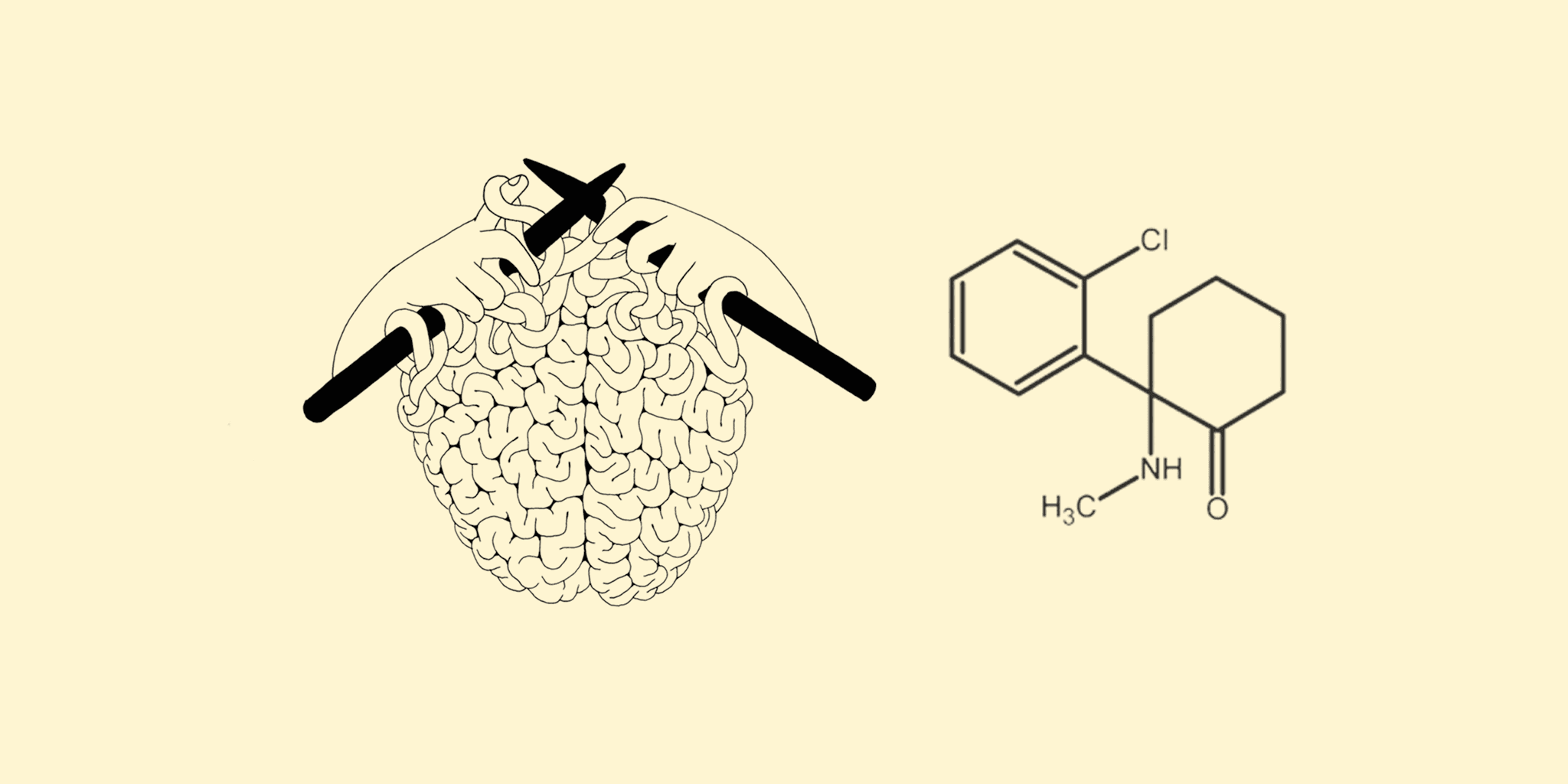
Ketamine is a dissociative that works on a different system (glutamate) entirely, and MDMA is an empathogen that floods the brain with serotonin and oxytocin.
This article focuses mostly on the classic psychedelics, which share a common master key, though we'll note where ketamine and MDMA diverge.
The master key: serotonin and the 5-HT2A receptor
Here's the elegant part:
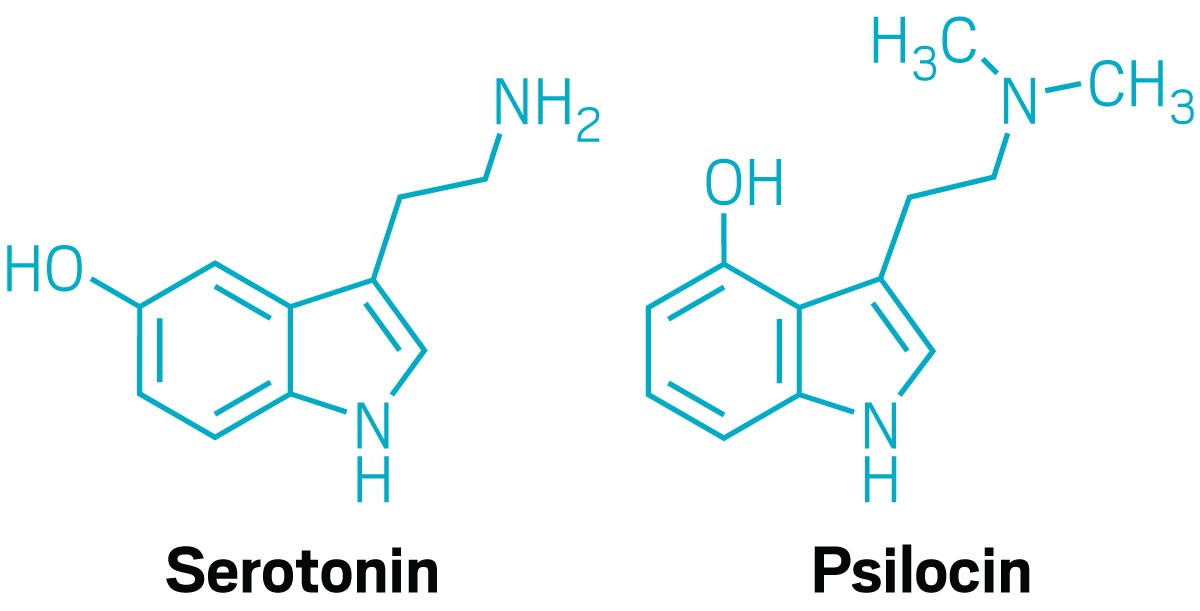
At the molecular level, classic psychedelics look a lot like serotonin, the neurotransmitter tied to mood. That resemblance lets them slot into a specific serotonin receptor called 5-HT2A, which is dense in the cortex, the outer layer of the brain where perception and higher-order thinking happen.
Nearly everything a classic psychedelic does traces back to switching that receptor on. Block it with another drug and the psychedelic effects largely disappear, which is how researchers know the 5-HT2A receptor is the trigger.
Turning down the "default mode network"
When that receptor lights up, one of the most striking effects is on the default mode network (DMN), a set of brain regions that hum along whenever you're self-reflecting, mind-wandering, ruminating, or narrating your own life. Some researchers call it the neural home of the ego.
In a landmark 2012 brain-imaging study, Robin Carhart-Harris and colleagues found that psilocybin reduced activity and connectivity in the DMN, and the more it quieted, the more intense the experience.
That dampening is the leading explanation for "ego dissolution," the temporary loosening of the boundary between self and world that people so often describe. With the brain's usual self-referential chatter turned down, the rigid patterns of thought that drive depression, anxiety, and addiction seem to lose some of their grip.
If you'd rather hear this from one of the scientists who mapped it, the short talk below is the clearest tour we know of. Robin Carhart-Harris explains what brain imaging reveals about the psychedelic state:

A more connected, more "entropic" brain
If the DMN is the network that gets quieter, the whole brain is what gets chattier.
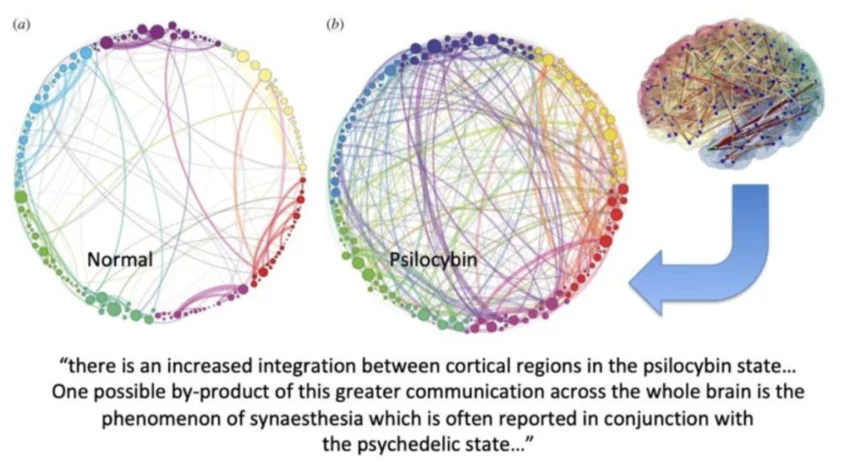
Under psychedelics, regions that don't normally talk to each other start exchanging signals, and the brain temporarily reorganizes into a more globally connected state.
A widely shared 2014 analysis visualized this as two maps: a normal brain's tidy, modular communication next to a psilocybin brain's dense web of new connections.
Carhart-Harris later folded this into the "entropic brain" theory, the idea that psychedelics push the brain into a higher-entropy, more flexible state. Think of gently shaking a snow globe so the pieces can settle differently. It's a compelling way to picture why a single experience can shift a perspective that felt permanently stuck.
Rewiring: psychedelics and neuroplasticity
"Rewiring" isn't entirely a metaphor.
In a much-cited 2018 study in Cell Reports, psychedelics were shown to promote structural neuroplasticity, spurring neurons to grow new branches and connections (dendrites and synapses). The researchers even coined a term for compounds that do this: psychoplastogens. Ketamine appears to work through a related burst of plasticity, which is part of why its antidepressant effects can arrive within hours.
The working theory is that psychedelics briefly reopen a window of plasticity, a period when the brain is unusually able to form new connections and unlearn old patterns. What you do with that window (rest, reflection, therapy, integration) may matter as much as the dose itself.
Why these brain changes may ease depression, anxiety, and addiction
This is where the science meets real-world hope.
When the brain is more connected and more plastic, it may become easier to break out of the rigid, self-reinforcing loops that characterize depression and anxiety.
Brain scans back this up. After psilocybin therapy for depression, researchers found the brain became more integrated and flexible, and the people whose brains loosened the most tended to improve the most.
But the molecule is only half the story.
Psychedelics don't install new beliefs. They seem to make the brain receptive to new ones. That's why context matters so much, and why many people choose to do this work with a trained guide who can help them prepare thoughtfully and integrate what surfaces. If you're weighing that path, Guides Collective can help you find an aligned, vetted guide rather than sorting through the hype alone.
For a grounded look at how these brain changes translate into mental-health treatment, and what's still unproven, this talk from the same research world is worth your time:
What the newest research shows
The picture keeps sharpening.
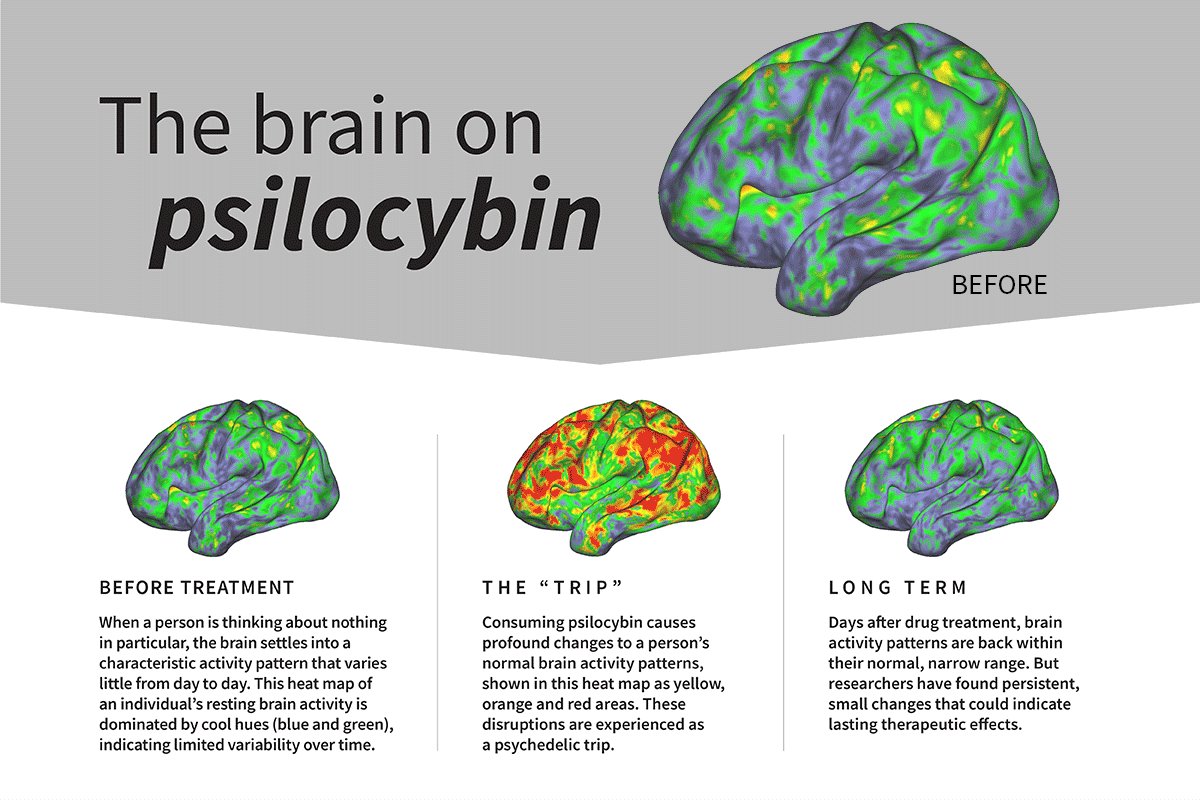
In one of the most rigorous studies to date, a 2024 paper in Nature, researchers scanned individuals before, during, and after psilocybin and found it dramatically desynchronized the brain, disrupting the normally stable networks that give us a continuous sense of self and place.
The disruption faded after the acute experience, but a subtler change in brain connectivity lingered for weeks. That lingering shift is physical evidence of the "window" staying cracked open.
Studies like this are moving the field from broad theories toward precise, person-by-person maps of what a psychedelic actually does, and when the effects wear off versus when they leave a trace.
Do psychedelics damage your brain? Myths vs. facts
Short answer: classic psychedelics are not known to be neurotoxic at typical doses, and the old "they put holes in your brain" claim is a myth (it came from flawed, sensationalized reporting about a different drug). They're also physiologically low-risk and not considered addictive.
That doesn't mean they're risk-free. The real risks are psychological.
A challenging experience can be destabilizing, and people with a personal or family history of psychosis or bipolar disorder are generally advised to avoid classic psychedelics, which can trigger or worsen those conditions. A rare condition called HPPD (lingering visual changes) can occur.
And heavy, frequent use of some substances carries its own risks. This is the heart of harm reduction: honest screening, the right setting, and respect for the power of what you're working with.
Do the changes last?
Mostly, the dramatic brain changes are temporary. The DMN comes back online, and the acute effects pass within hours. But some changes can outlast the experience.
Studies have found lasting increases in the personality trait of openness, and, as the 2024 research suggests, weeks-long shifts in connectivity.
Whether those shifts become durable change tends to depend on integration, the slower work of translating insight into how you actually live. The window opens on its own. Keeping the door open is the human part.
The part the brain scans miss
For all the elegance of the neuroscience, the scans can't capture the thing that most often makes the difference: what happens around the experience.
Preparation, a safe and intentional setting, and thoughtful integration afterward are what tend to separate a meaningful shift from a merely intense night.
If you're exploring whether guided, psychedelic-informed support might be a fit, Guides Collective offers a low-pressure, confidential way to connect with a vetted guide on our network. There's no pressure to decide anything today, just a grounded place to begin.
Frequently asked questions
What do psychedelics do to your brain
Classic psychedelics activate the brain's 5-HT2A serotonin receptors, quiet the default mode network (the "self" network), increase connectivity between brain regions, and promote neuroplasticity. Together, that produces altered perception, a looser sense of self, and a more flexible brain.
Do psychedelics permanently change your brain?
Mostly no. The major effects are temporary, though some changes can linger, including increased openness and weeks-long shifts in connectivity. Lasting benefit depends heavily on integration.
Do psychedelics really increase neuroplasticity?
Research suggests yes. Classic psychedelics and ketamine promote the growth of new neural connections, which is why some scientists call them "psychoplastogens." Much of this evidence is still early, and partly from animal studies.
Are psychedelics bad for your brain?
Classic psychedelics aren't known to be neurotoxic at typical doses, and aren't considered addictive. But the psychological risks are real, especially for people with a personal or family history of psychosis or bipolar disorder.
What is ego death or ego dissolution?
It's the temporary loss of the ordinary boundary between "you" and everything else, linked to the quieting of the default mode network. It can feel profound, frightening, or both.
Sources & further reading:
Carhart-Harris et al. (2012), PNAS: "Neural correlates of the psychedelic state as determined by fMRI studies with psilocybin"
Carhart-Harris et al. (2014), Frontiers in Human Neuroscience: "The entropic brain"
Petri et al. (2014), J. R. Soc. Interface: "Homological scaffolds of brain functional networks" (the brain-connectivity image)
Ly et al. (2018), Cell Reports: "Psychedelics Promote Structural and Functional Neural Plasticity"
Daws et al. (2022), Nature Medicine: "Increased global integration in the brain after psilocybin therapy for depression"
Siegel et al. (2024), Nature: "Psilocybin desynchronizes the human brain"
This article is for education, not medical advice. Psychedelics are illegal in many places and carry real psychological risks; nothing here encourages illegal or unsupervised use.
Learn More

Join our newsletter
No spam, unsubscribe anytime.